Installation
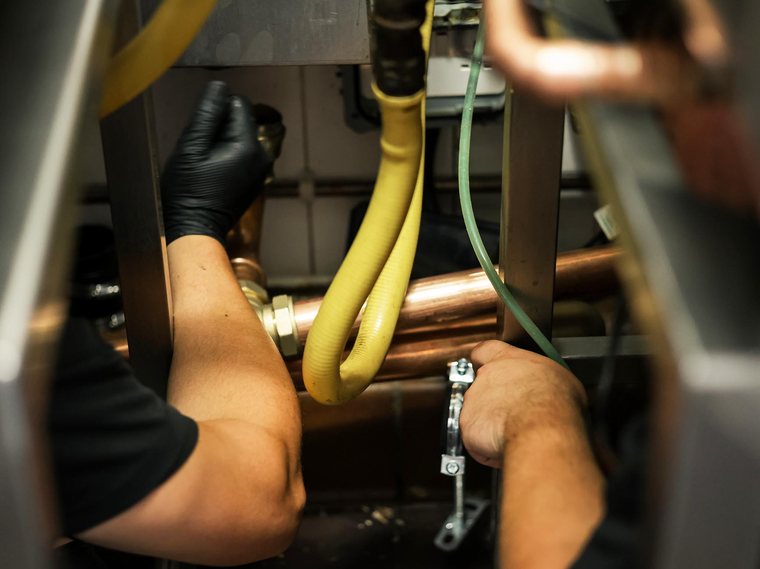
Surveyed, sized and fitted properly in the kitchen, with the pipework and gradients right so it actually works.

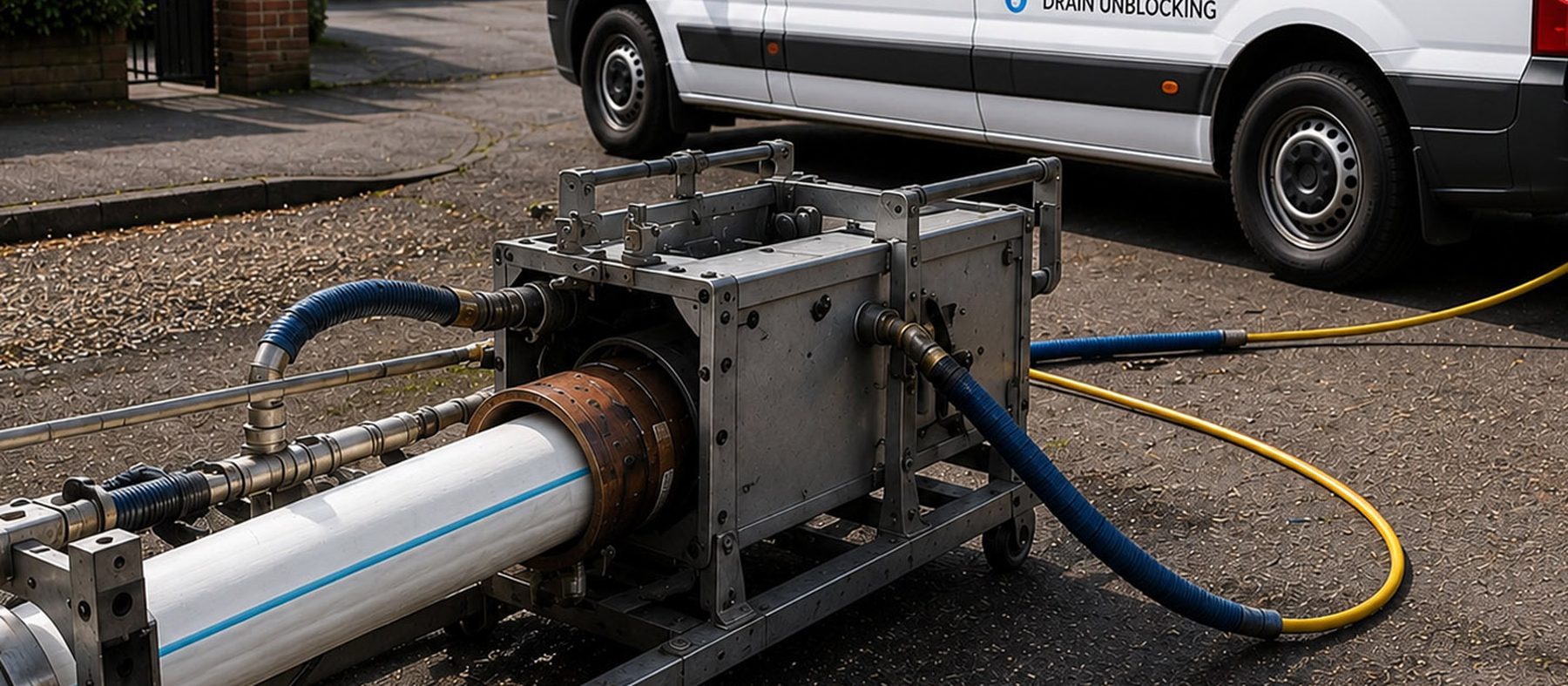
If your water company has asked you to fit a grease trap, or your kitchen has outgrown the one it has, we survey the site, size the unit correctly, supply it and fit it with our own engineers. We look after grease traps on over 1,000 commercial sites.
Tell us about the kitchen and we will arrange an engineer to look at it. You get a written recommendation and a fixed price, with no obligation.
Trusted by over 1,000 commercial sites




Water companies write to food businesses under Section 111 of the Water Industry Act 1991, which covers what may be discharged into a public sewer. If you have had that letter, the practical question is what to fit, how big it needs to be, and what evidence you will be asked for. The survey answers all three, and the compliance side comes with the job.
Included with the installation
It is not a separate service you have to buy. When we install a grease trap we check the site against what your water company actually requires, and we keep advising you for as long as you are a client.
Our water industry experienced teams' guidance is designed to help you understand how relevant legislation, regulations and best practice may apply to your site, and what practical steps you can take to operate responsibly. That includes grease trap requirements, wastewater discharge, environmental responsibilities, maintenance records, system performance and preventative servicing.
We do not overcomplicate the process. We aim to give straightforward, site-focused guidance that helps you understand what needs to be done and why it matters.
For as long as you are a client
The compliance advice stays free and ongoing for as long as you are a client of Grease Tech Drainage Solutions.
That includes answering them on your behalf. We handle the communication and negotiation with water companies and other agencies' compliance and enforcement teams, so you are not the one trying to reply to the letter.
Thames Water, in their own words
“If your business serves hot food, by law you need to have a grease separator installed.”
They also state plainly that discharging fats, oils, greases and food waste into sewers is illegal, and that a local authority can order you to install a grease trap for any building you use as part of your business.
Thames Water, Best practice for food businesses. They cite Building Regulations Part H 2002 and the Building Act 1984.What enforcement looks like
A Fulham takeaway was prosecuted and ordered to pay over £13,000 in fines and costs.
Thames Water published the case themselves in May 2025, for what they described as continuous sewer abuse. Most letters never get near this, and the point of dealing with one properly is that it stays that way.
Thames Water newsroom, May 2025.What we do
Most kitchens end up with a trap from one supplier, a service contract with another and nobody accountable when it stops working. All four of these sit with us.
Surveyed, sized and fitted properly in the kitchen, with the pipework and gradients right so it actually works.
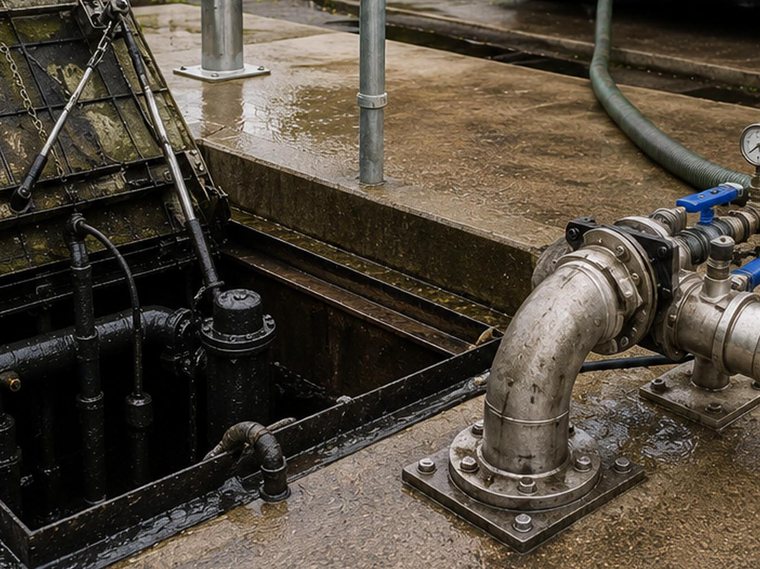
Automatic grease removal units, large passive traps and dosing systems, specified for your kitchen rather than whatever is in stock.
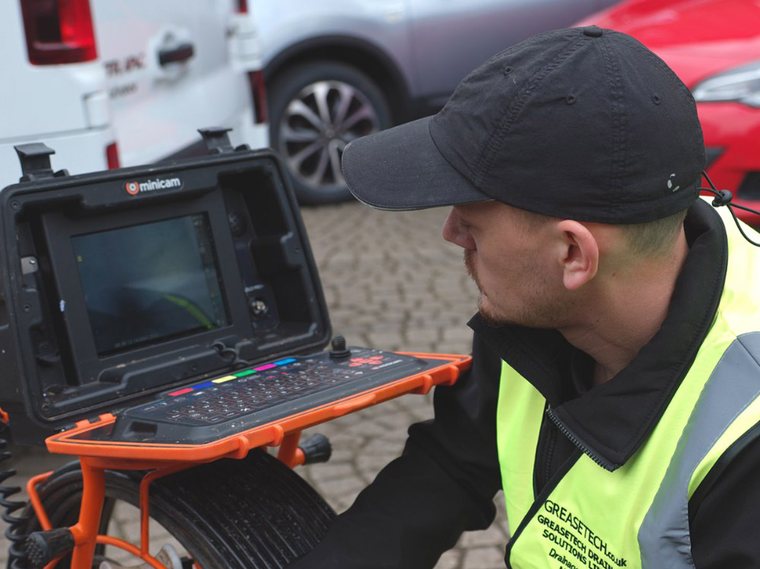
A kitchen that has outgrown its trap gets a larger passive unit or an automatic one, sized on what it cooks now.
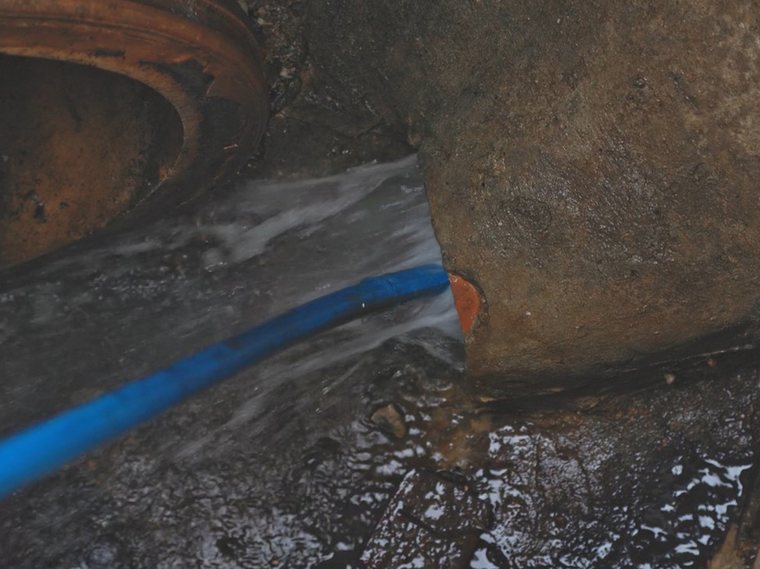
Scheduled around your trading pattern, with the waste removed and documented so you can evidence it later.
Before you buy a trap online
You can order a small unit for a couple of hundred pounds. What that does not get you is somebody who knows whether it is big enough for a busy kitchen, whether it can be fitted where you want it, or what happens in six months when it needs emptying.
Buying a unit online
Using GreaseTech
Equipment
We do not manufacture any of it, so we have nothing to push. The unit that goes in is the one that suits the kitchen, the drainage and the budget, and we install and service all of it ourselves. If you run several sites, there is more on grease management across an estate.
Automatic grease traps
A powered unit that continuously separates fats, oils and grease and collects them for removal, so the trap is not relying on somebody remembering to empty it. The usual answer for a busy kitchen or a site where access is difficult.
Large passive grease traps
Gravity separation, no power needed, and a lower cost to put in. In a busy kitchen it has to be large enough for what the kitchen actually runs and then emptied on a set interval, both of which we handle.
Dosing
An automatic biological dosing system that releases microorganisms to break down the fats, oils and grease that get past the trap and build up further down the drain. Fitted alongside a trap rather than instead of one.
Makes we supply, install and service



How it works
An engineer looks at the kitchen, the drainage and the space available, and asks what you have been told you need.
The right unit, the right size, where it goes, and a fixed price. In writing, so you can show it to whoever is asking.
Fitted at a time that does not close your kitchen, tested, and handed over with the documentation.
On a schedule that suits your volume, with the waste removed and every visit recorded.
Where we work
We support single sites and groups of sites from our base in Whitstable, with our own engineers and tankers.
Multi-site agreements for hospitality groups, pub companies, contract caterers, retail estates, healthcare trusts and facilities managers, delivered to one standard across every location.
Our engineers work out of 32 Joseph Wilson Industrial Estate, Whitstable, and cover Kent, the South East and London.
Accredited and audited

Whether you have a deadline from a water company or a trap that has stopped coping, an engineer will survey the site and give you a fixed price in writing.
Free, with no obligation